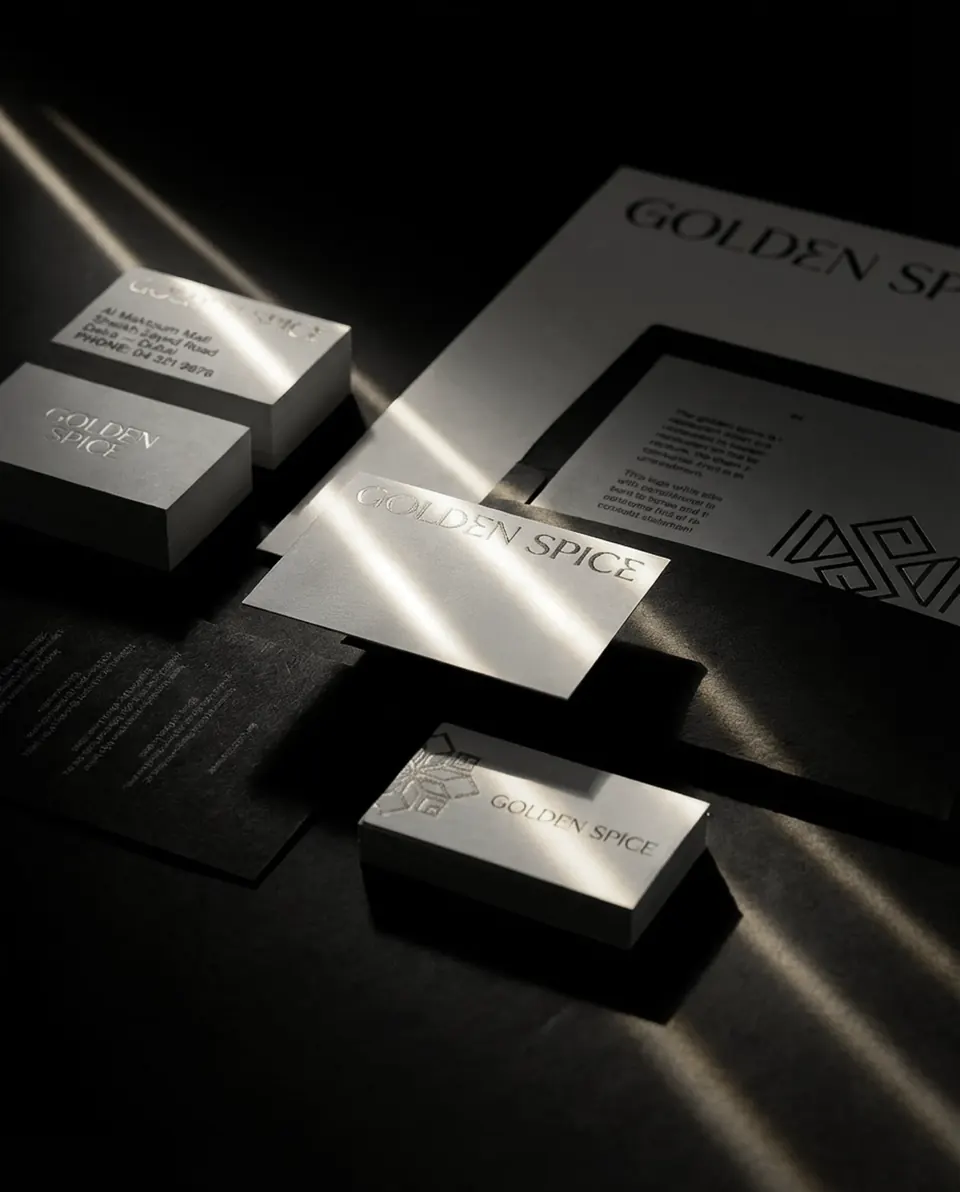
Marketing materials printing in Dubai
Brochures, flyers and catalogues that carry your message clearly, from launch day to the last hand-out.
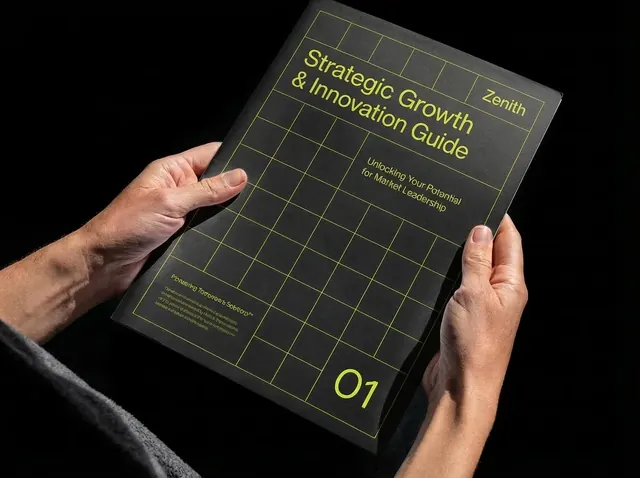
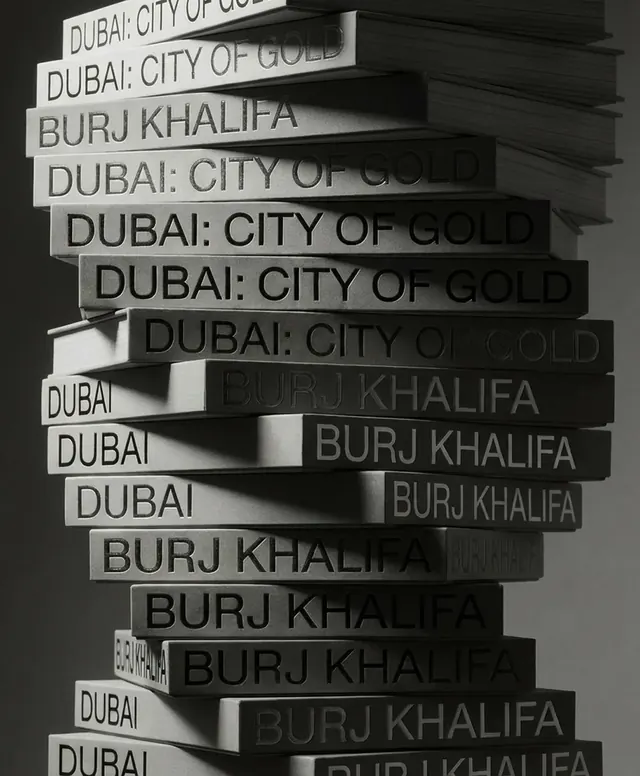
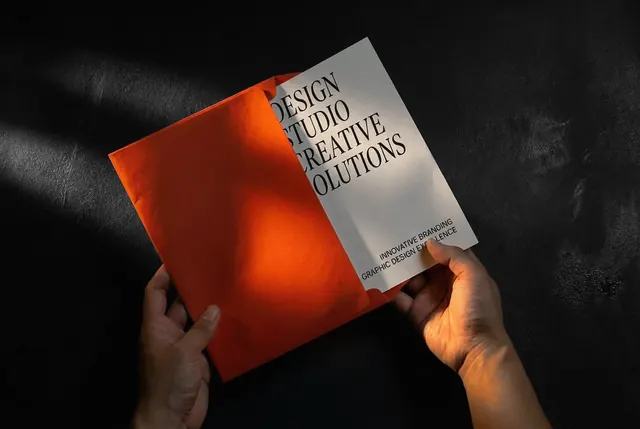
- 20+ years of print and production experience
- Design-to-production support
- Material and finishing guidance
- Delivery across all seven Emirates
Overview
What this service covers
Marketing print has to work fast: it is picked up, scanned and either kept or discarded within seconds. Format, paper and layout all affect which one happens.
We help you choose the right format and binding for the amount of content, and a paper that suits how long the piece needs to last.
01 / 08Brochures
- A4, A5 and DL
- folded or stitched
Suitable for
When businesses use it
Product or service launch
A coordinated set of brochures, flyers and posters for the same campaign.
Retail and hospitality
Menus, price lists and in-store material that is updated regularly.
Trade shows and events
Hand-outs and catalogues sized for visitors to carry away.
Sales enablement
Catalogues and brochures your team can leave behind after a meeting.
How it works
Four clear steps
Brief the campaign
Tell us the purpose, audience, quantity and when it is needed.
Pick the format
We recommend size, folding or binding, and paper for the content.
Approve the proof
Files are checked for bleed, resolution and colour before approval.
Print and deliver
Printing, folding or binding, then delivery to one or more locations.
Folds
Fold it to fit the message
The fold decides how a piece opens and in what order it is read. Try each one on the sheet.
4 panels
One fold down the middle. Clean and simple.
Menus · Invitations · Price lists
6 panels
Both sides fold in, one over the other, to a DL size.
DL leaflets · Service overviews
6 panels
Folds back and forth like a zigzag, so it opens in one pull.
Maps · Step-by-step guides · Inserts
6 panels
Two half panels close over the middle like doors.
Launches · Premium invitations
Binding
The page count picks the binding
Drag the page count; we suggest the binding that usually suits it. The run size is under pricing below.
24pages
Usually the right binding
Saddle stitch
Stapled through the fold. Pages come in multiples of four and the booklet opens flat.
Wire-O at any page count when pages must lie fully flat
Guidance only; we confirm the binding in your quotation.
Pricing
What shapes the price
Every quotation comes down to the same four things. Quantity matters most; drag it below to see how the production method changes.
- 01QuantityA few hundred pieces print digitally; from about a thousand, offset brings the price per piece down.
- 02Format and pagesSize, folds and page count set the sheet and the binding; page counts in fours keep booklets efficient.
- 03PaperCoated silk is the everyday choice; heavier covers, uncoated or textured stocks cost more.
- 04FinishingCover lamination, spot UV, folding and binding each add a step to the job.
01 · Quantity
250pieces
Usually the right fit
Digital
Short runs, quick reprints and versions for different branches or languages.
Offset above 500 pieces
Guidance only; we confirm the method in your quotation.
Before you order
Notes, files and finishes
Short references to read before you order: what to plan for, how to prepare your artwork and which finish suits the piece.
01Production notes 5
- Page counts for saddle-stitched booklets must be in multiples of four.
- Folded pieces need panels sized slightly differently so they close neatly.
- Heavier covers make catalogues feel sturdier and last longer in use.
- Very large quantities are usually more economical on offset presses.
- Arabic editions open from the right, so panel and page order is reversed; we set it up that way from the start.
02Artwork guide 13 pages
01
Bleed and safe area
Extend any colour or image that touches the edge 3 mm past the trim line, so no white sliver shows after cutting. Keep text and logos at least 4 mm inside the trim; the blade can drift by a millimetre.
02
Image resolution
Photos need 300 ppi at the size they will print. Images taken from websites or messages are usually 72 ppi and turn soft or blocky on paper, even when they look sharp on screen.
03
Colour mode
Supply files in CMYK, not RGB. Screens can show brighter greens, blues and oranges than ink can print, so convert early and judge the colours before you approve.
04
Rich black for large areas
Big black backgrounds print deeper as rich black (C40 M30 Y30 K100). Keep body text and fine lines in 100% black only, or the colours can show at the edges.
05
Fonts
Embed every font in the PDF or convert text to outlines. A missing font is replaced by another one, and line breaks, spacing and Arabic shaping can change.
06
Logos and line art
Send logos as vector files: AI, EPS, SVG or PDF. Vectors stay sharp at any size; a logo copied from a website or a screenshot cannot be enlarged cleanly.
07
Smallest sizes
Keep text at 6 pt or larger, and 7 pt for reversed or thin fonts. Lines thinner than 0.25 pt can break up or disappear in print.
08
Finishes on their own layer
Foil, spot UV and embossing are made from separate artwork. Put each finish on its own layer or spot colour, named clearly, in exact position over the print.
09
Folds and panels
Folded pieces are not divided equally. On a tri-fold, the panel that folds inside is 2–3 mm narrower; we send the right template before you design.
10
QR codes and barcodes
Print codes at least 20 mm wide, dark on light, with a clear margin all round. Scan the final proof with more than one phone before you approve it.
11
Proofreading
We print what you approve. Check names, phone numbers, emails, prices and dates on the final proof, ideally with someone who did not write them.
12
Exporting the PDF
Export as PDF/X-1a or PDF/X-4, single pages in reading order, with crop marks and bleed included. One file per item keeps everything easy to check.
13
What to send for this job
- Print-ready PDF with 3 mm bleed
- Images at 300 dpi at final size
- CMYK colour (we can convert and check RGB files)
- Text kept at least 3–5 mm from trim and fold lines
- For multi-page items: pages in reading order
No print-ready files? Our design team can prepare them — see creative design services.
FAQ
Marketing Materials: common questions
What is the difference between a flyer and a brochure?
A flyer is usually a single sheet printed on one or both sides. A brochure is folded or bound and holds more information, such as a product range or service overview.
Can you design the brochure as well?
Yes. We can lay out your content in your brand style, or prepare existing artwork for print. See our creative design service for details.
Which binding should I choose for a catalogue?
Saddle stitching suits thinner catalogues, perfect binding gives a flat spine for thicker ones, and wire-O lets pages lie flat. We recommend one based on page count and how it will be used.
Do you check my files before printing?
Yes. We check bleed, image resolution, colour mode and text placement, and send the final design for your approval before production.
What paper weight should I use for flyers?
Most flyers are printed on 130–170 gsm coated paper. For a piece that should feel more substantial, such as an invitation or a premium leaflet, 250–350 gsm board is common. We suggest a weight in your quotation.
Can you print bilingual Arabic and English brochures?
Yes. We plan the layout for both languages, either side by side or as two editions, and set Arabic pages to open from the right. You check both before anything is printed.
Will I see a proof before you print?
Yes. You approve a PDF proof of every page, folds and binding marked, before anything is printed. For large runs we can quote a printed proof on the actual paper.
How long does brochure printing take?
It depends on the run, the binding and any cover finish: flyers are quicker than perfect-bound catalogues. Your quotation states the time, counted from your approval of the proof.
Can you deliver to several locations?
Yes. Tell us the split by branch, store or event and we pack and label each batch, with delivery across all seven Emirates priced on the quotation.
From the journal
Worth reading first
- 01Print intelligence · 1 min read7 Printing Mistakes That Quietly Damage Brand Perception“Most brands weaken trust through printing choices they never realize they’re making.”Read the article →
- 02Materials · 2 min readWhy Heavier Paper Feels More Premium“Weight is the first thing a hand notices. What gsm really measures, why two cards of the same weight can feel different, and where the extra grams are worth paying for.”Read the article →
Marketing Materials
Get a quotation for your marketing materials.
Tell us the piece, the page count and the run. We suggest the format, paper and binding, and quote it clearly.